

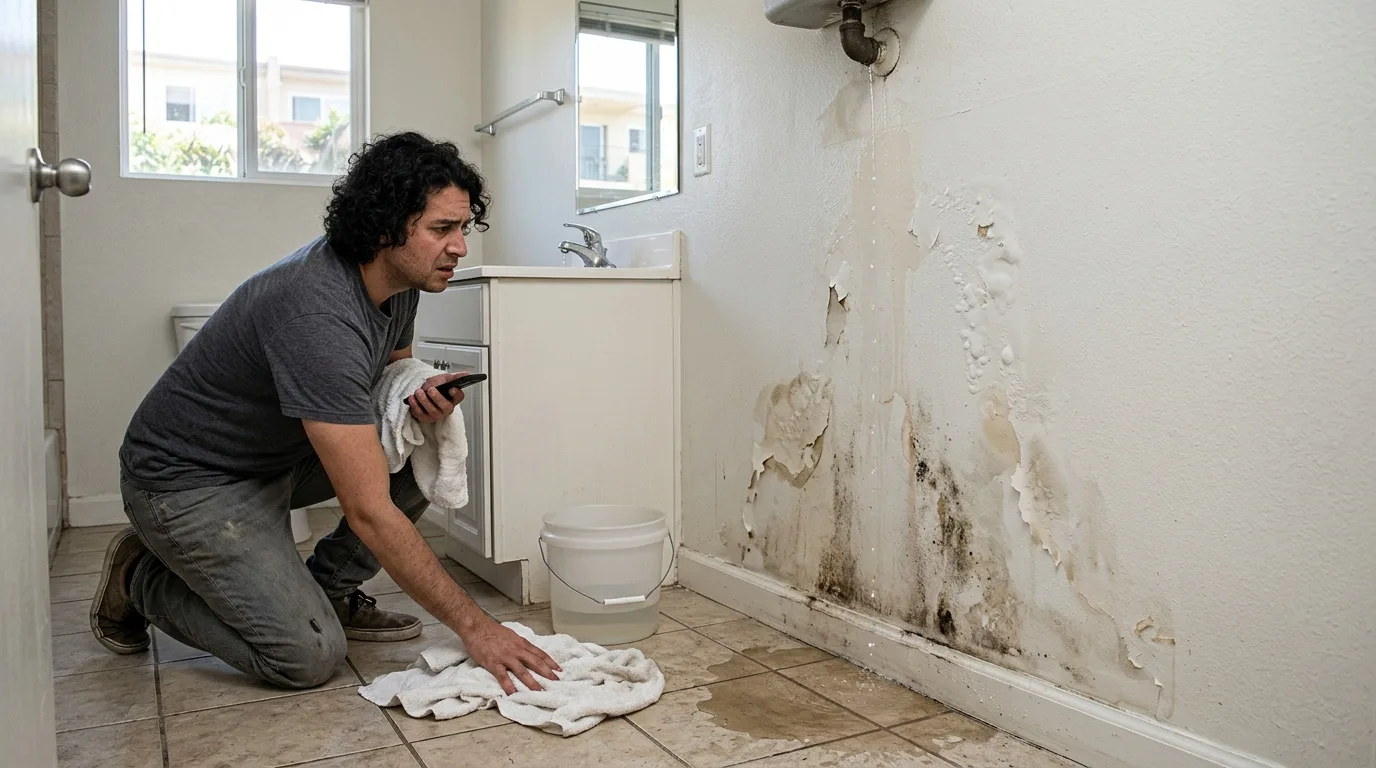
Water damage is one of the most common problems renters run into. A tap left open, a burst pipe, a broken washing machine or worn-out plumbing can do serious damage to a home and hit the family budget hard. And getting money back for ruined things and a damaged finish does not always work out.
Below is how to act in a San Diego rental, who to call, and what the tenant does versus what the landlord has to fix.
The first hour: power, water, photos
First, limit the damage to the property. If you are not the one who caused the flood, the order is roughly this.
Step 1. Turn off the electricity
Before anything else, shut the power to the unit off at the breaker panel, if you can reach it without stepping into water. This is recommended even when the water is running far from any wiring. The point is that water and soaked materials conduct electricity well. This way you protect yourself and your family from a shock and head off a possible short circuit and a wiring fire. Only after that move on to the next steps.
Do not walk through standing water or touch switches, outlets or appliances in a flooded room until the power to that area is off at the breaker panel.
Step 2. Stop the water and tell the neighbors
Shut off the water at the valves you can reach. If the water comes from the unit above, knock on that door and call the building's emergency maintenance line right away. It is better to always keep the property manager's number somewhere you can see it.
If the water is coming up from below rather than down from above, the order is close to the one in our guide on what to do first when a basement floods.
Step 3. Take video and photos
Be sure to record the aftermath of the flood on photo and video. These shots will be extra proof that the amount of the damage is justified. Add short comments as you go. Note the exact time, date and place of every shot. Photograph or film all the consequences of the leak, not only the worst room.
Written notice to the landlord: keep copies
Call the owner right away and tell them what happened. If you cannot reach the owner, keep limiting the damage and keep trying to reach them.
A phone call is not enough. Once the cause of the leak has been stopped, put it in writing. An email or a letter is enough: the address of the unit, the date, what happened, what is damaged and what needs repair. Keep a copy for yourself, together with the photos and the date you sent it.
The same goes for problems you notice before anything floods. If there are signs that something in the unit may soon fail because of wear or a bad state of repair, tell the owner and ask them to fix the defect. Otherwise, after an accident, the owner may try to shift the responsibility onto the tenant.
Who fixes what in a rental
A tenant's rights and a landlord's duties in California start from the same place. According to the California Department of Real Estate tenant guide, every residential lease carries an implied warranty of habitability. This means the landlord must repair problems that make the unit unfit to live in. Tenants, in turn, are responsible for damage caused by their own neglect, or by their family, guests or pets.
So the question of who pays for water damage in a rental property comes down to what happened and whose fault it was. If the tenant left a tap running, that is the tenant's neglect. If a rusted faucet broke off or an old pipe leaked, the repair is the landlord's.
If the tenant's cat knocked the TV off a shelf and the screen cracked, everything is clear. But a faucet or a pipe can also fail from age. The tenant is not to blame here. If something broke from normal wear, the questions go to the owner of the property.
What helps avoid the argument
- A move-in inspection. When signing the lease, look over the unit and everything in it carefully: walls, floors, heaters, plumbing, faucets, appliances.
- A signed condition record. It should describe the state of the furniture and appliances, and the quality of the finish, so there is always something to refer to if a dispute comes up.
- Photos attached to the lease. Take pictures of valuable property and attach them to the agreement.
- Small flaws written down too. At move-in, scratches on the laminate may look like nothing to the tenant. At move-out, the owner may simply “forget” them and say the tenant ruined the floor, so the deposit does not come back.
Your belongings and renters insurance
The landlord's side is the unit itself. The tenant's furniture, clothes and electronics are a separate matter. If you have renters insurance, report the claim as soon as you can and send the photos and a list of the damaged things; the insurer assigns an adjuster.
Try to find receipts or any other documents that confirm what the ruined things cost ahead of time. Card statements, online order history and photos of the items help too. Without renters insurance, ask a tenant attorney or a court self-help center what you can claim.
Wet belongings should not stay in a damp unit while this is sorted out. How things are taken out, listed and dried is described in our article on how packing out a home works.
When repairs drag on: mold
The hardest case is a landlord not fixing water damage. Wet drywall, flooring and cabinets that are only wiped down on the surface can stay damp inside, and that is where mold starts. A landlord who painted over water damage without fixing the cause has not removed the problem, only hidden it.
- Keep writing. Each new notice goes in writing with a date, photos, and what is still wet, stained or smells musty. Keep copies of all of it.
- Ask about the cause, not only the stain. A leak that is not fixed will come back through new paint.
- Do not decide on your own about rent. Before holding back any payment or doing repairs yourself, talk to a tenant attorney or a court self-help center first.
Spots and odor after a leak are covered on our page about mold remediation after water damage, and the drying itself on the page about water damage restoration and drying.
Moving out while the drying runs
If the unit cannot be lived in during the work, agree with the landlord in writing as well: which rooms are closed, for how long, and what stays inside. Things that cannot stay can be packed and stored until the unit is dry; this is what contents pack-out and storage services are for.
Before you hand the keys over for the work, walk through the unit once more with a camera. The photos from before, during and after are the same proof you started collecting in the first hour.
If you want to know who you would be dealing with, read who we are and how we work and what San Diego customers wrote, or start from the restoration company home page.