

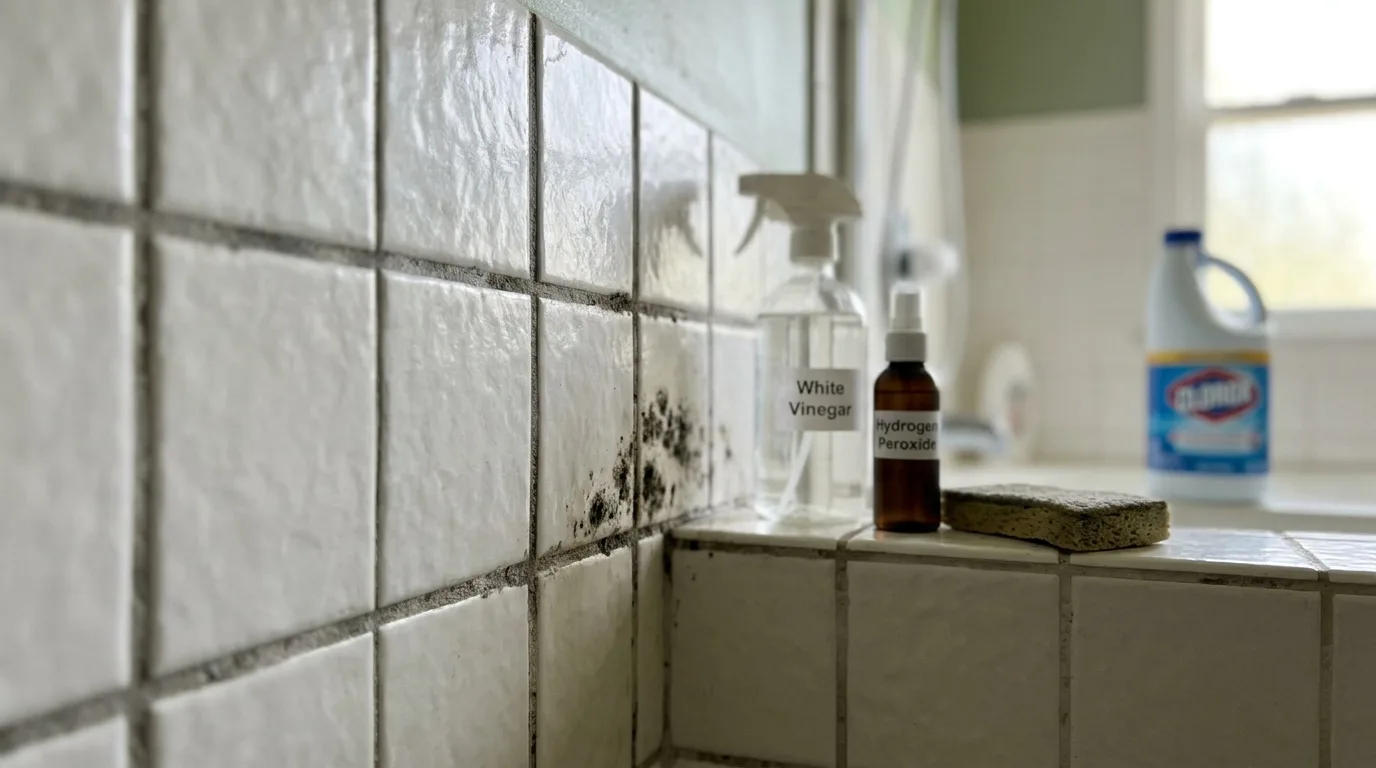
Mold is a nasty tenant that settles in homes. It slowly eats away at drywall, wood and fabric, gets deep into them and stays there for a long time. Below are the ways to fight it and what kills mold on walls and on other surfaces.
Mold is the visible coating formed by microscopic mold fungi. They are everywhere: they can grow on almost any material and in almost any conditions. Mold shows up not only on the surface of things. It sends threads of mycelium inside them, so it is not always easy to get rid of.
You can't get rid of it by wiping the surface with a rag dipped in tap water. In a few days there will only be more of it.
Why the Surface Decides: Hard or Porous
Homemade products are used when there is little mold and it has only touched the top layers, without getting into the structure of the building material: concrete, drywall, wood. They work only on the outside. They do not slow down or stop the spores from growing back.
Mold most often starts on porous surfaces: plaster, wooden parts, drywall. Little by little the fungus destroys these materials, and that can end in major repairs. Furniture, especially solid wood, is also at risk. On it mold shows up as spots that over time can ruin the piece completely.
Stronger professional products are used when a mold spot won't scrub off or leaves a mark after you have tried on your own.
How Big Is Too Big
Assess the scale of the problem. According to the EPA's mold cleanup advice for homes, a moldy area under about 10 square feet (roughly 3 by 3 feet) can usually be cleaned by the homeowner. If the area is larger, or there was a lot of water damage, follow the EPA's remediation guidance or bring in an experienced professional. Here is how professional mold remediation is done.
Bleach
Does bleach kill mold? It works on tile and glass, but not on porous materials. It is toxic and should be used with care.
Make the disinfecting solution according to the instructions on the label. Usually sodium hypochlorite is mixed with water at 1:10. Treat the surfaces thoroughly and leave them to dry. Be careful: chlorine must not go on wood, paint, drywall or other porous materials, because it eats into them.
Does Bleach Kill Mold on Wood?
Plain chlorine bleach, as said above, is not for wood. Scrub wood with detergent and water and dry it fast; use a product made for wood only as its label says.
Treat the areas hit by the mold and take in 8 to 12 inches around the spot. Then scrub off what is left of the mold and wipe the surface dry with a paper towel, a towel or a rag.
Vinegar
Plain white vinegar suits most surfaces, but not natural stone such as marble, which acid etches. It has a smell. It can discolor wallpaper or furniture. It is put on with a spray bottle or a rag. For prevention the treatment is repeated after a week.
Don't take wine or apple cider vinegar, because they leave colored streaks. Put white vinegar on the affected surface with a rag or spray it on. After an hour wipe it with a damp towel or sponge. If any marks are left, take them off with the rough side of the sponge or with a brush. After the treatment be sure to air out the room.
As a vinegar mold killer, it works on the fungus, but it does not keep it from coming back while the moisture stays. Some advise putting white vinegar on the affected areas and leaving it there for several hours.
Lemon Juice or Citric Acid
It has the same properties as vinegar and a pleasant smell. It works best on tile. Dissolve one teaspoon of citric acid powder in about 7 ounces of water and put it on the spot. If you have no citric acid, take half a lemon and rub the area. Rinse with clean water after 15 minutes. This method is not for colored surfaces, because citric acid bleaches.
Hydrogen Peroxide
Hydrogen peroxide is safe and easy to work with. It can be used on any surface, but carefully on painted surfaces and fabric, so as not to bleach them. It is put on with a spray bottle or a rag. For prevention the treatment is repeated after a week.
Another way: soak a cotton pad and press it onto the affected surface. After 20 minutes clean off the growth with a brush and rinse with water.
Detergent and Water
The most important thing is to remove the visible growth thoroughly. If the layer of mold is fresh, it comes off easily with a sponge, a brush and warm soapy water. The order of work is simple:
- Clean it off: remove the growth from the surface in gloves, with a brush, sponge, scraper or rag.
- Treat it: apply any mold product.
- Dry it: let the surface dry and air out the room.
- Keep it away: don't let the mold form again.
Killing is not the same as removing. Per the EPA, dead mold can still cause allergic reactions, so it has to be cleaned off the surface, not just killed where it sits.
Baking Soda
Baking soda is safe and has no harsh smell. It can be used on any surface. Make a solution from one tablespoon of soda and a glass of water. Wipe the mold or spray it, let it dry. After an hour wipe everything with water to avoid streaks.
What Does Not Work
There is a lot of advice online, and not all of it is true. Many products recommended against mold do little or don't work at all:
- Tea tree essential oil. It is often advised as an eco-friendly way to remove mold, but it is not a proven way to remove it.
- Mothballs. They have a cloying smell, give off gas in the air and are dangerous for people.
What Has to Be Thrown Away
Waste left after the treatment goes straight into a sealed bag. That keeps the mold from spreading. A few more rules:
- Cleaning tools: throw out rags, brushes and sponges after disinfecting.
- Clothes: wash the clothes you wore to remove the mold. Better yet, put on something old you don't need.
- Porous materials: moldy drywall, ceiling tiles, carpet and padding usually have to be thrown away, not washed.
If mold has gone deep into the walls, the damaged materials are cut out and replaced. When a room has to be emptied before that kind of work, read about pack-out services for your belongings.
Getting Rid of the Smell
Household products can only mask the musty smell. The only way to get rid of it is to beat the mold. If the mold is already gone but the smell is still there:
- Baking soda: sprinkle a thin layer where the mold grew, leave it for a few hours, then vacuum it up.
- Charcoal: set a few containers of charcoal around the room. In a day or two the smell should fade.
- Air: good ventilation finishes the job.
Gloves, Mask, Ventilation
Chemical products and most homemade ones have a sharp smell. They are also toxic and irritate the skin and the lining of the mouth, eyes and nose. People prone to allergies may get a cough, runny nose, itching and redness from them. Breathing in mold spores can also be dangerous for your health.
Do not mix chemicals that don't go together. The most dangerous one is chlorine bleach. It gets along only with water. Never mix it with cleaners that contain ammonia: together they give off toxic fumes. Vinegar and peroxide are not good partners either.
Protect yourself and do the treatment the right way:
- Gloves: put them on so you don't get a chemical burn. Check them for holes. If there are any, throw them out and put on whole ones. If chemicals get on your skin, wash it right away under running water with soap.
- Respirator and goggles: don't forget them, or a face shield or mask, to cover the eyes, nose and mouth. A protective suit won't hurt either.
- Instructions: follow the label strictly. Even a small step away from the stated dose can cause trouble.
- Ventilation: open windows and doors to air out the room during the treatment so you don't breathe in the fumes.
- Test patch: first try the product on a small area so you don't ruin the finish.
When you handle moldy items, be careful not to spread the spores around the house.
Fixing the Moisture
What kills mold permanently? No product does it alone. Find the cause and get rid of it first. Leaks, high humidity (over 60%), condensation and poor ventilation all bring on mold. Found stains on the ceiling from a hole in the roof? Have the roof repaired. The hygrometer shows humidity at its limit? Buy a dehumidifier.
The main reasons mold appears:
- Poor ventilation. Closed spaces and too little airing out create good conditions for the fungus. Moisture builds up, and that is an ideal setting for mold.
- Water leaks. In pipes, plumbing and the roof they can lead to moisture building up. Even leaks that look small at first raise the humidity a lot.
- Temperature swings. When the temperature in a room changes, condensation forms on walls and other surfaces.
- High humidity. A reading over 60% is a signal to act. The reasons can be natural or household ones, poor insulation for example.
Whatever got wet has to be dried before any product will help. If the moisture came from a burst pipe or a flood, start with water damage restoration and drying, and see what to do first when your basement floods.
To keep mold from forming again:
- Air out regularly. Open windows, especially in bathrooms and kitchens where humidity is higher. Run the bathroom fan and the kitchen hood.
- Watch the humidity. Use a hygrometer. When it climbs, a dehumidifier or an air conditioner that dries the air can help. Turn on the range hood when cooking, and air out more often if you dry laundry indoors.
- Repair leaks. Check pipes and the roof from time to time. Fixing them on time keeps moisture from building up.
- Insulate. Insulated walls and windows reduce condensation, which the fungus loves.
- Let air move. Rearrange furniture and clear out cluttered shelves. Air that circulates freely won't let mold develop.
- Mind the houseplants. Don't overwater them.
Mold follows dampness. The longer you leave it alone, the more it spreads and eats materials from the inside. Light, regular cleaning is the best help in spotting and preventing it. More on water, fire and mold problems is in our restoration blog articles. You can also read who we are and how we work, see what homeowners say in reviews, or go back to the restoration company home page.