

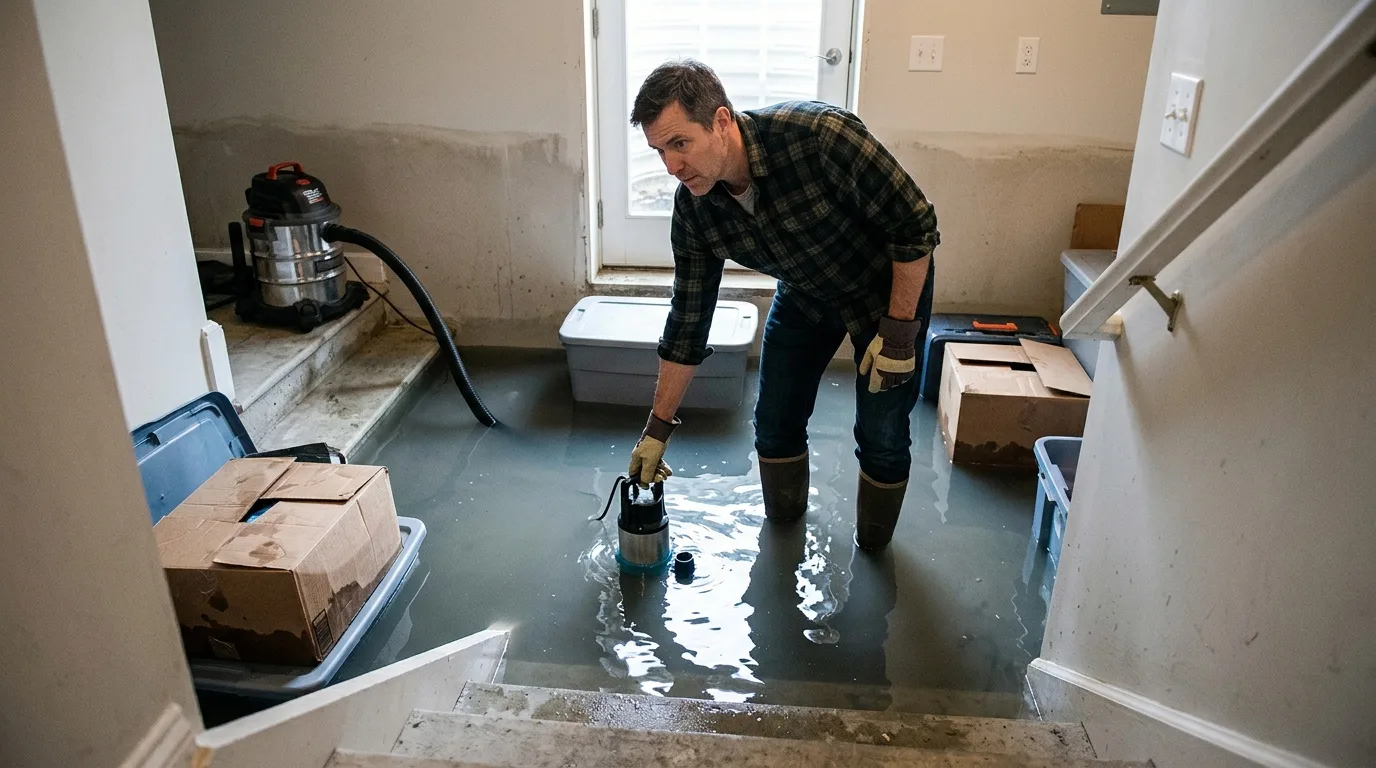
One of the most unpleasant events in a homeowner's life is the unexpected appearance of water in the basement. The causes can vary. But the result is always the same: ruined mood, damaged space and its contents, and unforeseen repair expenses. Here is what to do if your basement floods and how to prevent it from happening again.
Basements hold great importance in the overall setup of a private home. They can house rooms of various purposes — from a workshop to a home theater or, say, a game room. But most often they are used for storage. This raises their value in terms of daily living and comfort. That is why it is so important to keep this space dry and fully functional.
Main causes of basement flooding
Construction practice has shown that homeowners often pay insufficient attention to flood protection or fail to account for all the reasons this extremely unpleasant situation occurs. For instance, only specialized professionals know that excessive water mass can exert hydrostatic pressure of up to 1.5 tons per square meter on basement walls. In areas prone to heavy rains — and San Diego does get sudden winter storms and flash flooding — appropriate waterproofing should be installed.
Another example: people frequently overlook the fact that utility channels can also become a source of moisture penetrating the space. Only a reliable drainage system alongside other protective measures can save the situation.
Professionals identify several main causes of basement flooding in private homes.
Defects in the water supply system
Often a home is designed so that the main water supply components are placed in the basement. This creates additional flooding risks. The causes may include leaks at pipe joints (faulty gaskets), failure of pumps or other equipment, loss of tank integrity due to corrosion, malfunction of monitoring devices, and others.
Sewer line failures
Disruption of normal wastewater flow can be caused by a blockage in the line. Natural factors should not be ruled out either: shifts in soil layers or damage to pipe integrity by tree roots. Then the accumulated sewage, following the path of least resistance, will inevitably end up in the basement.
Groundwater and surface water
Seepage occurs when groundwater rises above the basement floor level and the drainage system cannot handle the runoff. Surface flooding happens because the storm drainage and rainwater collection systems cannot cope with the volume of liquid, which overflows the edges of the drains. In San Diego, this is particularly common during El Niño winters or after prolonged rains that saturate the clay soils found in many neighborhoods.
Flooding during dry weather
Most flooding happens during wet weather, but it is not impossible for it to occur during dry spells either. There are several common causes:
- Blocked or damaged sewer line. Sewer systems deteriorate over time. Tree roots can penetrate a pipe and deform it. In such a case, normal drainage is blocked, and sewage backs up. Usually this is the home's own wastewater flooding the basement.
- Leaks from a shower, toilet, or sink. A compromised fixture needs servicing, and eventually it must be replaced or repaired.
- Sump pump failure. Some basements are built in lower areas that tend to be wetter than others. In those cases the drainage system — a sump pump, for example — must run continuously to keep the water table around the foundation below the basement floor. If the system fails, water floods the basement.
Step 1: Ensure your safety
The moment you discover water in the basement, think about your own safety first. Water conducts electricity. You need to take precautions.
Electricity
Find your breaker panel and shut off the circuits going to the basement, lower level, or cellar. If you cannot reach the panel safely — if the water is already close — call an electrician. Do not try to be a hero.
Lighting
If there is any suspicion of a gas leak during the flooding, do not use open flame — no candles. Use battery-powered flashlights, headlamps, or portable floodlights. This is safe.
Personal protection
Put on rubber boots or waders if the water level is above ankle height. They protect against two threats at once: electric shock from damaged wiring and contact with sewer water. Heavy-duty rubber gloves are a good idea too — touching wet surfaces, panels, and fittings with bare hands is unwise even after the power has been cut.
Step 2: Pump out the water
Here lies the most important and non-obvious detail. Pumping must be done at the right time. This means you should not grab a bucket the second you realize the basement is flooding. If the basement is being flooded by heavy rain or rising water, wait until the water level on your property starts to drop. If you begin pumping too early, you will waste your effort — the outside water will simply flow right back in.
Moreover, a rapid drop in water level inside the basement while the exterior groundwater remains high creates a pressure differential that can damage the foundation and floor. This is especially critical for lighter wood-frame structures common in many San Diego neighborhoods.
Sometimes homeowners with insurance are afraid to do anything before the adjuster arrives. This is a mistake. Starting to pump before calling the insurance company is not grounds for claim denial. The law and insurance rules directly require the homeowner to take all possible measures to reduce the damage. In other words, saving your property is your obligation, not a violation.
How to pump
A sump pump is your main tool. You need a pump designed to handle dirty water containing sand, silt, and small debris. An ordinary garden pump will break down quickly. Place the pump at the lowest point. If there is a sump pit — a depression in the floor — that is ideal. If not, you can temporarily create one by digging a small hole or sinking a sturdy bucket flush with the floor. This helps collect the thin layer of water that the pump can no longer pick up on its own.
Place a sheet of metal or plastic under the pump. This reduces the amount of sand and silt drawn into the pump and prevents it from sinking into the soil due to vibration.
Water coming up through the slab
If you see water seeping through cracks in the concrete floor slab, pumping is a temporary measure. Water will keep returning. In this case, you will eventually need to open up the affected area and repair the waterproofing underneath. But for now, pump out whatever accumulates so you can begin drying.
Step 3: Dry the space
Getting rid of the water is only half the job after a basement flood. Residual moisture is a serious problem. If you do not remove the dampness absorbed by walls, floors, and furnishings, mold and mildew will soon appear.
Clear the basement
Carry everything out: shelving, furniture, stored goods. This reduces the risk of mold spreading and opens access to every corner. On top of that, wooden items dry faster outdoors in the sun, and ultraviolet light helps disinfect them.
Clean up
Remove silt, dirt, and debris. If the floor is bare earth, the top layer — about two to three inches — should be removed and replaced with clean, dry sand. This eliminates the smell of dampness and bacteria.
Ventilate
Open doors, hatches, and windows and leave them open for at least two to three days. San Diego's warm, dry climate is an advantage here — the arid air accelerates evaporation considerably compared to more humid regions.
If possible, set up fans. Aim one toward the exit to push humid air out, and another inward to draw in dry, warm air. This speeds up the process dramatically.
Apply heat
If the weather outside is damp, use electric heat guns or infrared heaters for drying. But be careful: rapid heating of wet concrete causes cracks. It is better to dry longer at a moderate temperature.
Reduce air humidity
A household or commercial dehumidifier will pull moisture out of the air, which in turn forces it to evaporate more quickly from the walls. When operating a dehumidifier, keep windows and doors closed so the unit works properly. Once it stops extracting moisture in one area, move it to another part of the basement and run it again.
Step 4: Eliminate the root cause
After you have dealt with the immediate consequences, you need to find the source of the problem. The house will suffer again and again if you do not figure out where the water came from. There can be several causes, and often they combine.
Check the drainage and storm systems
If a drainage loop is installed around the house, it may be clogged with silt, leaves, or damaged by tree roots. Instead of flowing away through the pipes, water collects at the foundation and floods the basement through micro-cracks.
Inspect the perimeter grading
This is the slope of the soil around the building. If it has settled, cracked, or separated from the wall, rainwater goes straight under the foundation. Fix the grade and seal the gaps. In San Diego, where soil can shift after dry-wet cycles, grading problems are common.
Check the waterproofing
This is the most frequent and most complicated cause. Waterproofing may have been damaged during construction, deteriorated over time, or been done poorly from the start.
The ideal approach is to excavate around the foundation from the outside and restore or apply new coating, membrane, or spray-on waterproofing. If that is not feasible, you can use penetrating waterproofing compounds on the interior walls. A special compound is applied to a clean, dampened concrete wall. It reacts with components in the concrete, crystallizes, and permanently seals pores and capillaries, creating a waterproof barrier from the inside. The wetter the old foundation is, the deeper the reagents penetrate — and the more effective the protection.
Fix leaking pipes
Sometimes the cause of flooding is a simple pipe leak, not groundwater at all. So inspect all pipes, valves, and water supply entry points.
Step 5: Treat for mold and mildew
Even after drying, mold spores can remain in the pores of building materials. These organisms do not just produce an unpleasant smell — they pose a genuine health threat.
To address this:
- Scrub affected surfaces with a stiff brush or sandpaper to remove the visible layer.
- Generously treat walls and floors with specialized antiseptic and antifungal products. Chlorine-based solutions, copper sulfate, or professional-grade chemicals work well.
Work in a respirator, gloves, and protective clothing. After treatment, ventilate the space thoroughly once more.
How to prevent basement flooding in the future
To avoid repeat flooding, a number of protective measures should be carried out. Based on the main causes of unwanted water in the basement, this work should ideally begin at the design stage. Experienced professionals study the surrounding landscape, determine the groundwater level, and analyze the soil structure. Based on this data, the type of waterproofing is chosen, a drainage system is designed, and the storm and household sewer systems are planned.
More often, though, the problem arises in homes already built. Concrete does not get saturated overnight — it can take several years. And if the basement is already getting damp from groundwater, the question becomes: how do you deal with the moisture in an existing structure?
Exterior drainage
If your downspouts dump water less than five feet from the house, you need to direct it farther away by adding plastic or metal extensions. A permanent underground drain pipe is invisible and can move large volumes of runoff to the storm sewer well away from the home.
Gutter maintenance
Clean leaves from your gutters in spring and fall. Blocked gutters force all roof water down onto the foundation, increasing the likelihood of basement flooding. In San Diego, debris from dry Santa Ana wind events can clog gutters just as effectively as autumn leaves.
Observe water behavior
During a heavy rain, watch how water accumulates around the house and note the main flow paths. If surface water heads toward the building, consult a local contractor about regrading the yard so water flows away from the home.
Backup power
Install an automatic generator to provide electricity for critical equipment — sump pump, refrigerator, HVAC — in case of a power outage. Choose a location that is fully isolated from water. Without backup power, you may come home to a flooded basement and frozen pipes.
Automatic sump pump
Build a small sealed sump pit in the basement floor and install a permanent drainage pump with a float switch. As soon as the water level rises, the pump turns on by itself and removes the water. This is a good solution if flooding is mild but regular — for example, every rainy season.
Additional tips
For residual humidity and odor, place buckets of silica gel, charcoal, or salt in the corners. Replace or regenerate the silica gel by heating it as it becomes saturated. This does not replace ventilation or dehumidifiers, but works well as a supplementary drying aid after a flood.
If you have tried everything and the water keeps coming back, if the building is older and the foundation is complex — do not waste your energy. Calling in waterproofing and drainage professionals is not admitting defeat. It is saving time and money in the long run. Specialists will run diagnostics and find a solution you may have missed.
A flooded basement is a serious test for a homeowner. If water is in your basement, act methodically: secure the safety of your household, pump out the water, thoroughly dry the space and belongings, and finally eliminate the cause of the flooding. The key is not to stop halfway. If you only dry the space without addressing the source, the problem will return with renewed force. Find where the water is getting in and put up a reliable barrier. Only then can you truly put the worry of dampness, mold, and property damage behind you.
By the way, our parent company covers San Diego and the rest of the county — the full story is on pack-out and restoration in San Diego.